
Quick Answer
For immediate danger in mainland China call 110 for police, 120 for an ambulance or 119 for fire. For a traffic accident, 122 is the traffic-police number. State the location first and ask a nearby staff member to help if communication is difficult.
If this happens, do this
| Situation | What to do next |
|---|---|
| You need urgent help | Call the appropriate emergency service; do not wait for a website feedback reply. |
| You do not know the address | Show a map pin, street sign, hotel name or nearby landmark to someone assisting you. |
| Your passport is missing | Report it and contact your own embassy or consulate. Immigration paperwork may also be needed. |
| You have an immigration question | Use NIA 12367; it is not a replacement for emergency dispatch. |
Lost Passport in China: Who to Contact and What to Keep.
The Core Emergency Numbers
110 — Police
Use for crime, theft, assault, harassment, serious public safety issues or when you need police help.
Chinese phrase:
请帮我报警。
Please call the police.
120 — Ambulance
Use for medical emergencies, serious injury, breathing trouble, severe pain or life-threatening conditions.
Chinese phrase:
请帮我叫救护车。
Please call an ambulance.
119 — Fire
Use for fire, smoke, explosion risk or rescue situations.
Chinese phrase:
这里着火了。
There is a fire here.
122 — Traffic accident
Use for traffic accidents and road incident reporting.
Chinese phrase:
这里发生了交通事故。
There has been a traffic accident here.
12367 — Immigration service hotline
Use for immigration-related consultation, entry-exit questions and administrative service inquiries. NIA provides 24/7 consultation with English support. Its December 2025 notice also describes interpreter-assisted French, Russian, Japanese and Korean service. Follow the language menu actually offered; this is an immigration enquiry line, not emergency dispatch.
12395 — Maritime rescue
Use for an emergency at sea or involving a vessel. Give the vessel name, position and situation; alert the crew if you are a passenger.
The numbers above remain readable without this image. Ask nearby staff to help explain your location if needed.
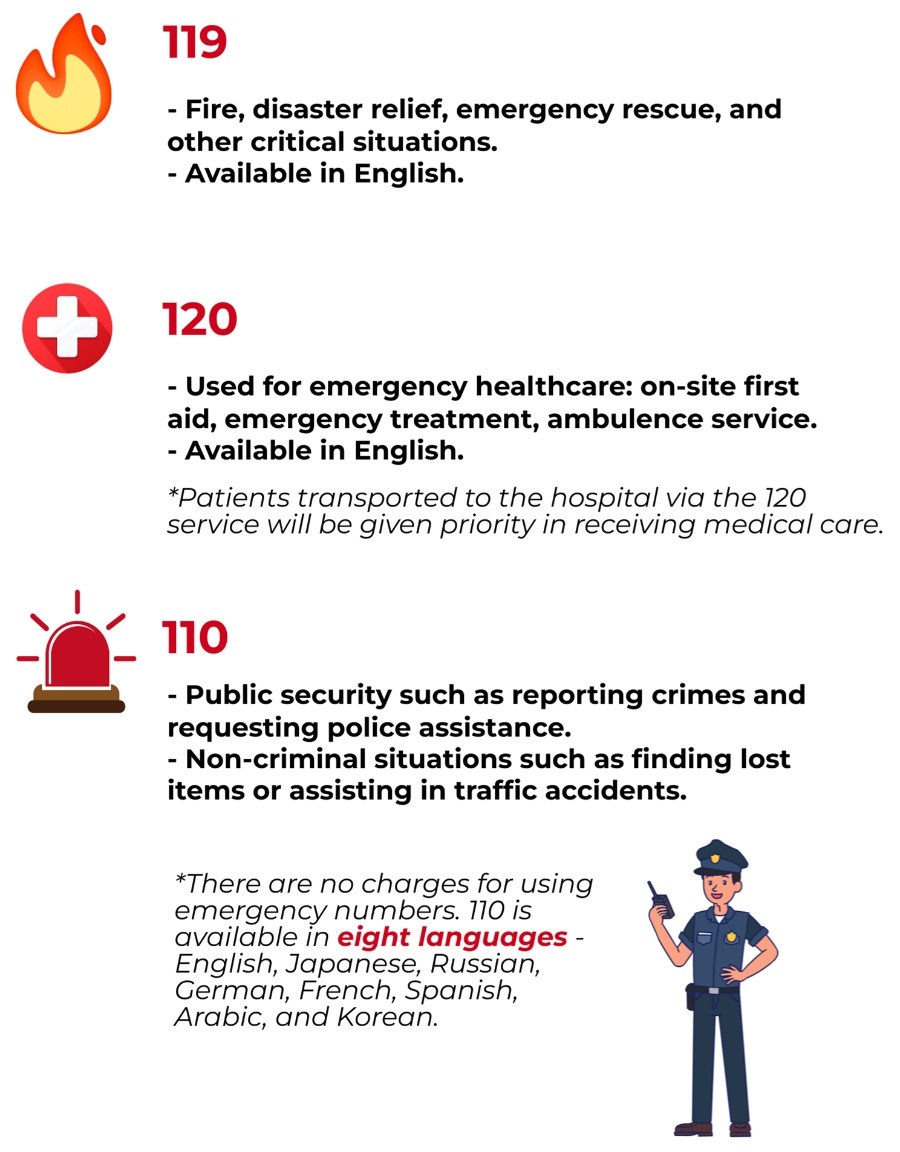
Shanghai emergency-number guide. Language support described here is local; ambulance treatment is not necessarily free.
Image source: Shanghai International Services. Screenshot rights remain with the publisher. Reference example; screens can vary by device, account and app version. Dates and prices shown are not live.
If you cannot make the call
If your phone has no service, your travel SIM is data-only, or the call fails, ask nearby staff to call from a working phone. This website cannot dispatch emergency help or locate you. Open the quick emergency page and Chinese help cards.
What to Say First
When calling emergency services, speak slowly. If you cannot speak Chinese, ask a nearby hotel staff member, police officer, metro staff member or shop worker to help.
Start with:
- I need help. 我需要帮助。
- I am a foreigner. 我是外国人。
- I cannot speak Chinese. 我不会说中文。
- This is my location. 这是我的位置。
- Please call my hotel. 请给我的酒店打电话。
Prepare Before You Need Help
- Save emergency numbers in your phone.
- Save your embassy/consulate emergency contact.
- Save your hotel address in Chinese.
- Keep passport photos and visa/entry screenshots stored securely.
- Share your itinerary with someone you trust.
- Keep travel insurance details offline.
- Know your nearest major hospital if you have medical conditions.
Embassy and Consular Help
For lost passport, arrest, serious medical emergencies or death of a family member, contact your embassy or consulate. For example, the U.S. Embassy in China maintains emergency contact pages for U.S. citizens. Other nationalities should save their own embassy contact before travel.
Embassies usually cannot pay your bills, force a hotel or airline to help, or override local law, but they can guide you through emergency procedures and replacement documents.
Lost Passport Basic Plan
- Promptly ask the local public-security exit-entry office about a passport-loss report or certificate; report theft to police as well.
- Contact your embassy or consulate.
- Prepare passport photos and identity documents.
- Ask your hotel for help with address and local police station.
- Check the required Chinese visa/stay or departure paperwork and the documents accepted for your next booking.
Related Guides on Get Around CN
- China First Visit Checklist for Foreigners
- What to Do in the First 2 Hours After Landing in China
- What to Do If a Hotel Refuses Foreign Guests in China
- How to Save Your Hotel Address in Chinese
Sources and review
Sources reviewed on 2026-09-10. These sources support the service or policy facts; the practical fallback steps are editorial guidance. This is not a recorded field test.